Facility Management in a Community of Fewer Than Seventy Homes

Maintenance quality determines how a community looks in year eight, and it is the thing buyers investigate least at purchase. Facility management villa...
Maintenance quality determines how a community looks in year eight, and it is the thing buyers investigate least at purchase. Facility management villa community Bangalore developments provide varies enormously, and the arithmetic at a small enclave differs from a large one in ways worth understanding before you commit.
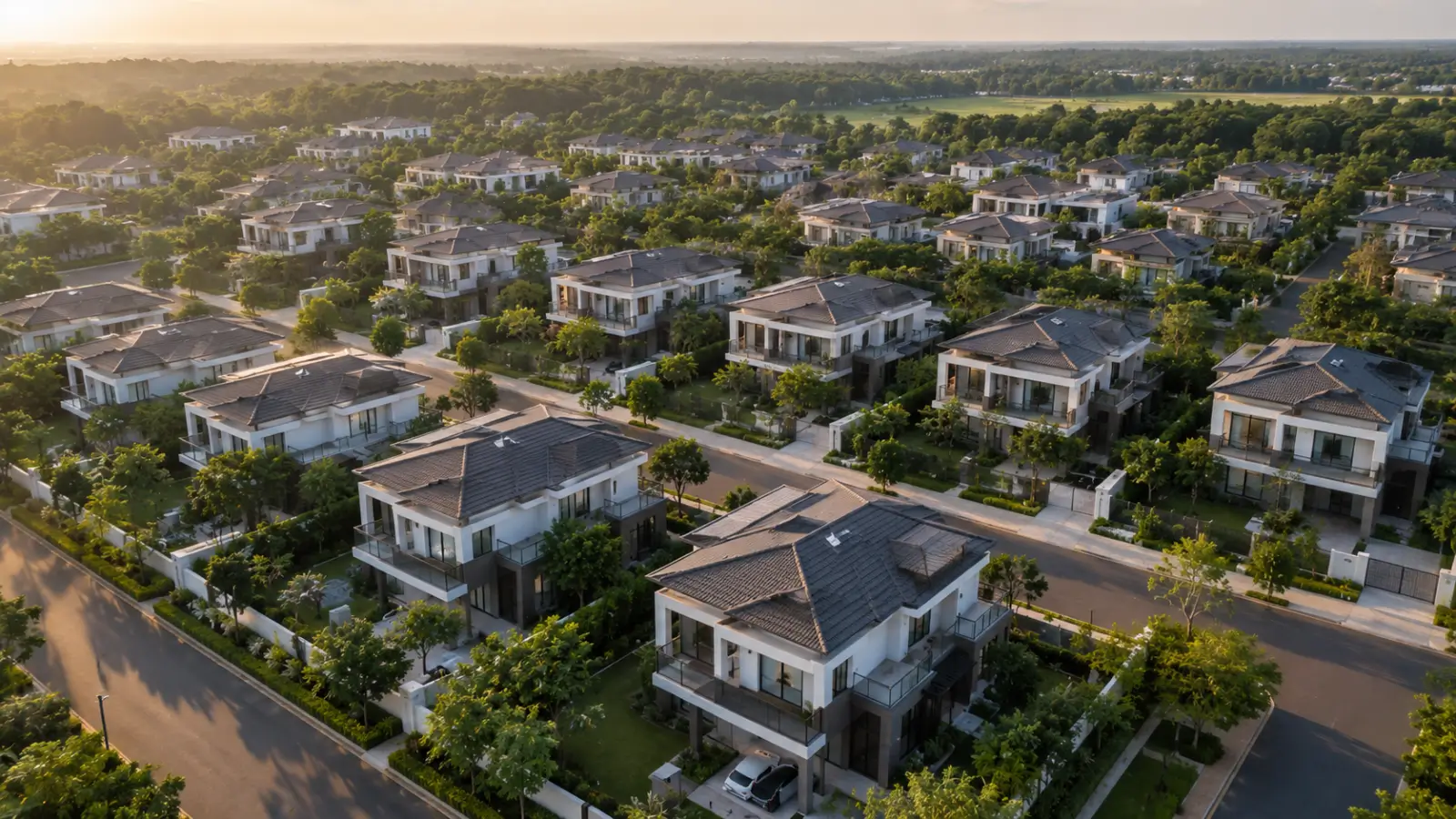
Scope here runs across the shared estate. Facility management operates on site rather than remotely. Security works around the clock, with perimeter CCTV and controlled access at the main gate and internal sub-zones. The landscape — a central green spine carrying walking trails, water features and planting, plus lawns, the garden pavilion and retained mature trees — requires continuous horticultural attention. Recreation infrastructure, from the clubhouse through courts and the pool ensemble, needs its own maintenance regime.
Utilities add a further layer that apartment residents rarely think about. An on-site water treatment plant handles consumption and recycling under the zero-water discharge protocol. Rainwater harvesting follows KSPCB, BWSSB and MoEF guidelines. An organic waste converter and refuse management system run at community level, alongside community-level EV charging provisioning. All of that requires operation and servicing rather than merely installation.
Scale cuts both ways, and the honest version includes both edges. Fewer than seventy households means a manager can know every resident and every plot, response times are short, and standards are easier to hold. It also means the cost of running a clubhouse, courts, pools, landscape and utility infrastructure divides across under seventy contributors rather than several hundred — so the per-household share is materially higher than in a large development. A maintenance corpus falls due at handover as a one-time contribution to the sinking fund.
Ask four things before booking. What is the expected recurring maintenance charge and how is it calculated? Which items sit inside the facility management scope and which remain the owner's responsibility — private pools and individual gardens, for instance, are the household's. How will the residents' association be constituted? And what commissioning documentation will be handed over for the treatment plant, harvesting system and waste converter? Reviewing the the community programme and services shows what the shared programme includes.
Related reading: Water and Waste: How the Community Handles Its Own.
FAQs
What does facility management cover?
The shared estate — security, landscape, clubhouse, courts and pool ensemble, plus utilities including the water treatment plant, rainwater harvesting and the organic waste converter.Is maintenance cheaper in a small community?
No. Running the same infrastructure across fewer than seventy households means a higher per-household share than a development of several hundred.What stays the owner's responsibility?
Private pools and individual plot gardens, among other in-plot elements. Confirm the precise scope split before booking.
Related Articles

Living in a Zero-Water-Discharge Home: What Changes Day to Day
Sustainability specifications describe equipment; residents experience habits. Living in a zero water discharge home differs from living in a conventional...

Property Tax on Large Homes in Bangalore
Recurring taxation gets overlooked in a purchase dominated by one-time charges, and it should not be. Property tax on villas Bangalore owners pay is an...

BBMP and BDA Approvals Explained for Buyers
Approval acronyms appear in every Bangalore project listing and are rarely explained. Understanding BBMP BDA approval meaning for buyers matters because...
How a Residents' Association Works in a Small Community
Governance rarely features in a purchase decision and shapes daily life for decades afterwards. Understanding how a residents association gated community...