Living in a Zero-Water-Discharge Home: What Changes Day to Day

Sustainability specifications describe equipment; residents experience habits. Living in a zero water discharge home differs from living in a conventional...
Sustainability specifications describe equipment; residents experience habits. Living in a zero water discharge home differs from living in a conventional one in a handful of practical ways, most of them minor, and understanding them before handover prevents the small frustrations that come from working against a system rather than with it.
Start with what the arrangement means. Every MAIA Estates development is designed so that no water leaves the site as discharge, applying from construction through operation. Rainwater harvesting follows KSPCB, BWSSB and MoEF guidelines, an on-site water treatment plant handles consumption and recycling, and solar-based hot water goes in where feasible. An organic waste converter and refuse management operate at community level alongside it.
What residents actually notice is mostly about water sources and their uses. Treated water and fresh supply serve different purposes, and irrigation, washing and general use draw on the system rather than on unlimited municipal supply. Planting choices in your own garden matter for the same reason — species and irrigation regimes assuming abundant water push demand up against a closed system serving 65–70 households, each with a private pool and landscaped garden. Choosing appropriately is genuine participation rather than a gesture.
Waste separation is the other daily habit. An organic waste converter only works if organic waste reaches it separated, which means household routines and staff briefing need to reflect that from the start. Establishing it as a habit in the first month is considerably easier than retraining a household a year in, so include it when you set up staff routines rather than treating it as an afterthought.
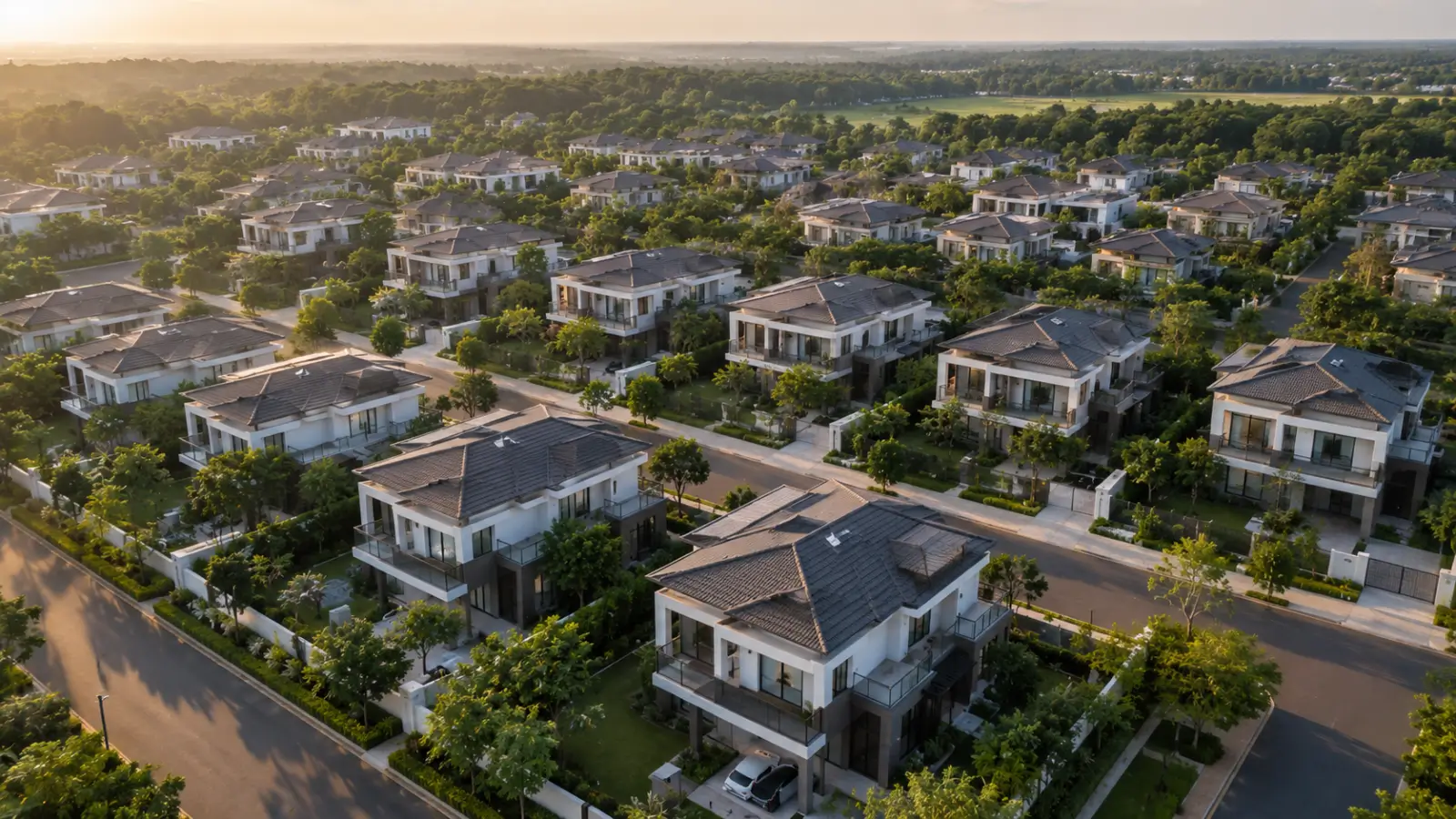
Why any of this matters at this density is worth stating plainly. Sixty-five to seventy houses, each carrying a private pool, garden and outdoor pavilion, generate water demand well beyond an equivalent number of apartments. Handling that on site is an operating necessity rather than a marketing position, and the system depends on residents using it as designed. Ask at handover for commissioning documentation on the treatment plant, harvesting system and waste converter, and confirm each is operational. Reviewing the the sustainability specification sets out the full specification.
Related reading: Pool and Garden Upkeep: The Ownership Reality.
FAQs
What does zero water discharge mean for residents?
No water leaves the site. Treated and fresh supply serve different uses, and irrigation and general use draw on a closed system rather than unlimited municipal supply.Does it change daily habits?
Modestly. Planting and irrigation choices matter, and organic waste needs separating so the community converter works as intended.What should I confirm at handover?
Commissioning documentation for the water treatment plant, rainwater harvesting system and organic waste converter, with each confirmed operational.
Related Articles

Property Tax on Large Homes in Bangalore
Recurring taxation gets overlooked in a purchase dominated by one-time charges, and it should not be. Property tax on villas Bangalore owners pay is an...

BBMP and BDA Approvals Explained for Buyers
Approval acronyms appear in every Bangalore project listing and are rarely explained. Understanding BBMP BDA approval meaning for buyers matters because...
How a Residents' Association Works in a Small Community
Governance rarely features in a purchase decision and shapes daily life for decades afterwards. Understanding how a residents association gated community...

Ageing in Place: Adapting a Villa Over Time
A house bought at fifty is often still home at seventy-five, and multi-level living becomes a different proposition across that span. Planning ageing in...