
Downsizing at this level rarely means less space. Households considering downsizing to a luxury villa India offers are usually moving from a large...
Downsizing at this level rarely means less space. Households considering downsizing to a luxury villa India offers are usually moving from a large independent house on its own land, and what they are actually shedding is operational burden rather than square footage — a distinction worth being precise about before the move.
An independent bungalow means running everything yourself. Security is your arrangement, water is your problem, waste is your contract, and a failure at two in the morning is your phone call. A managed community reallocates most of that: facility management operates on site, security runs 24x7 with perimeter CCTV and controlled access at the main gate and internal sub-zones, and utilities operate at community level — an on-site water treatment plant under the zero-water discharge protocol, rainwater harvesting, and an organic waste converter with refuse management.
What stays yours matters equally. Every plot carries a private swimming pool, landscaped garden, deck and outdoor dining pavilion within its own boundary, and those remain the owner's responsibility rather than the community's. So the correct comparison is not managed versus unmanaged but rather how much of the estate you continue to run — a genuine reduction, though not a removal. Staff quarters with a private entrance come as standard across all three bands, which supports the household staffing most buyers at this stage already have.
Single-level considerations belong in the design brief. Residences here are multi-level, with private home lift provisioning included in each. Households anticipating reduced mobility should raise ground-floor bedroom positioning, bathroom layouts and thresholds during design development, since each house is developed to a brief before construction rather than selected from fixed plans.
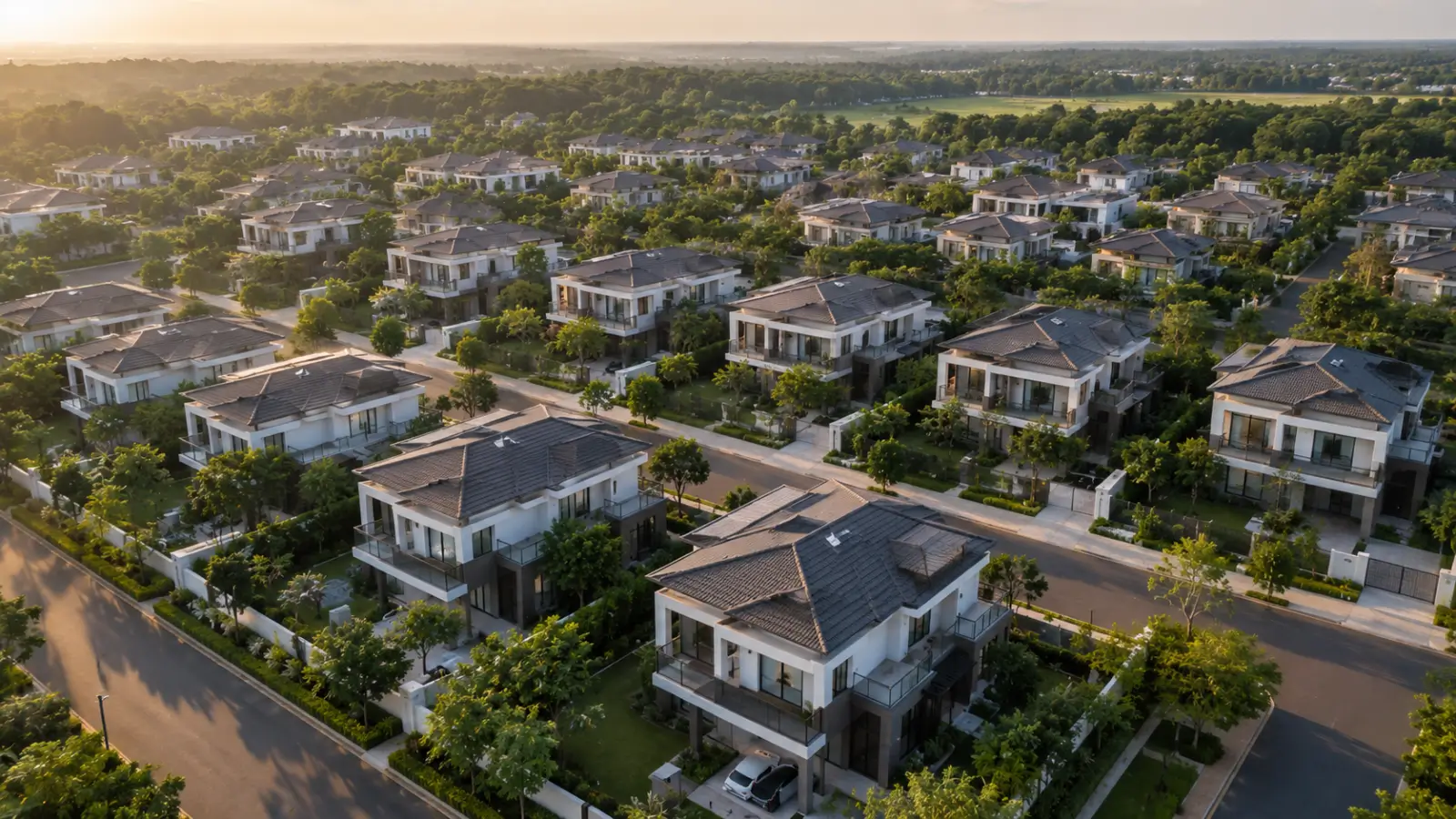
One trade-off deserves naming. A community of 65–70 households delivers quiet, privacy and real amenity availability, and it is also small — the social texture differs from a large development, and from an established neighbourhood where you have lived for decades. Some buyers find that restful and some find it isolating. Visit and judge for yourself. Reviewing the the community services and programme sets out what the community programme includes.
Related reading: Multi-Generational Households: Planning a Home for Three Generations.
FAQs
What operational burden does a managed community remove?
On-site facility management, 24x7 security with perimeter CCTV and controlled access, and community-level utilities including water treatment, rainwater harvesting and waste conversion.What remains the owner's responsibility?
The private pool, landscaped garden and everything else within the plot boundary.Can the house suit reduced mobility?
Private home lift provisioning is included in each multi-level residence. Ground-floor bedroom positioning and bathroom layouts should be raised during design development.
Related Articles

Living in a Zero-Water-Discharge Home: What Changes Day to Day
Sustainability specifications describe equipment; residents experience habits. Living in a zero water discharge home differs from living in a conventional...

Property Tax on Large Homes in Bangalore
Recurring taxation gets overlooked in a purchase dominated by one-time charges, and it should not be. Property tax on villas Bangalore owners pay is an...

BBMP and BDA Approvals Explained for Buyers
Approval acronyms appear in every Bangalore project listing and are rarely explained. Understanding BBMP BDA approval meaning for buyers matters because...
How a Residents' Association Works in a Small Community
Governance rarely features in a purchase decision and shapes daily life for decades afterwards. Understanding how a residents association gated community...